- National Status: Rapid range contraction since 1980s. Occurs as far north as southern Scotland, main strongholds coastal. Population trend 10 years -25%; since 1976 -87%.
- West Midlands Status: Most remaining populations in the north and west. Range contracting. Population trend 10 years – decreasing.
- Hotspots: Bury Ditches, Caer Caradoc Hill, Wenlock Edge quarries, Titterstone Clee all in Shropshire. Bury Ditches, Lea Quarry.
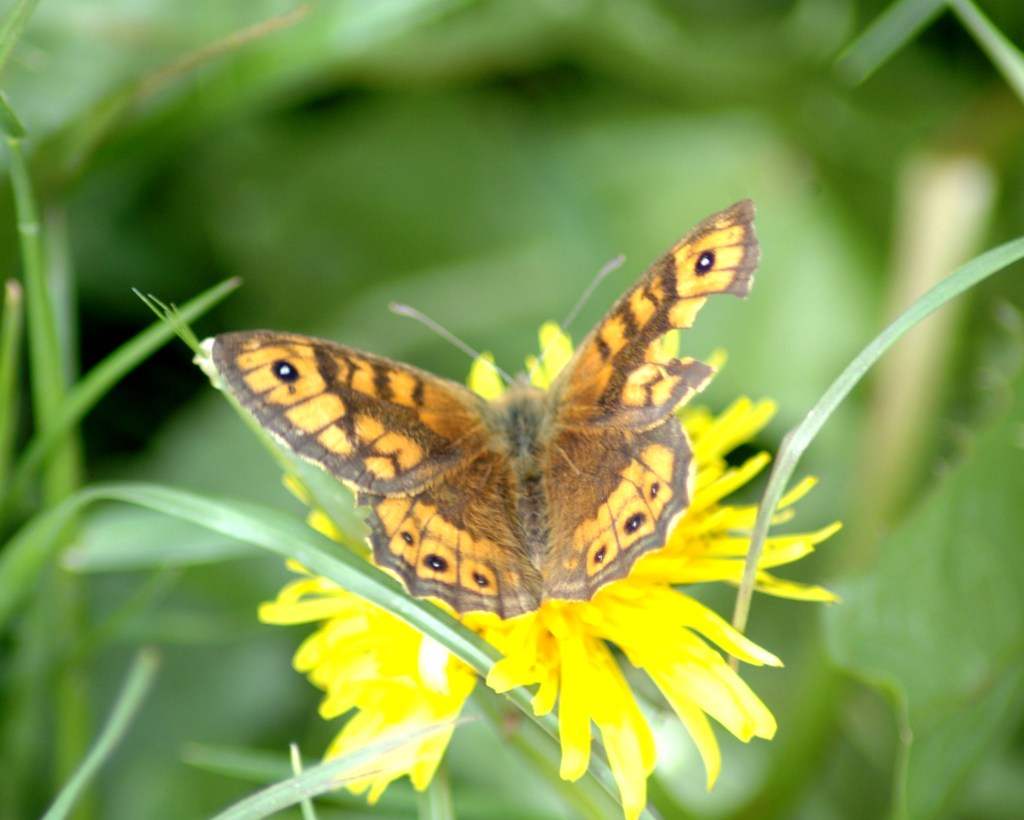
- Habitat: Warm, sunny spots with short grass and rough stony ground. Has a liking for warm microclimates. Colonial but will wander occasionally into gardens.
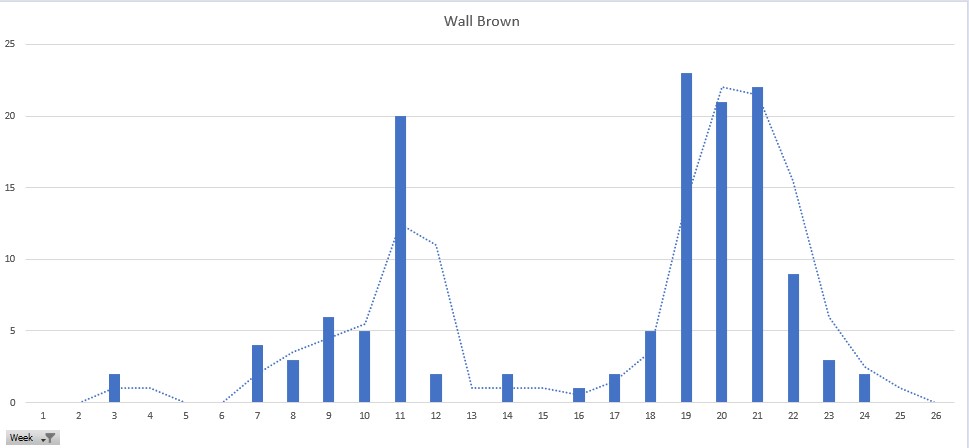
- Flight Period: Double-brooded flying May/June and late July/September. Second generation more numerous. Third brood occasionally in southern Britain but very rare in the West Midlands.
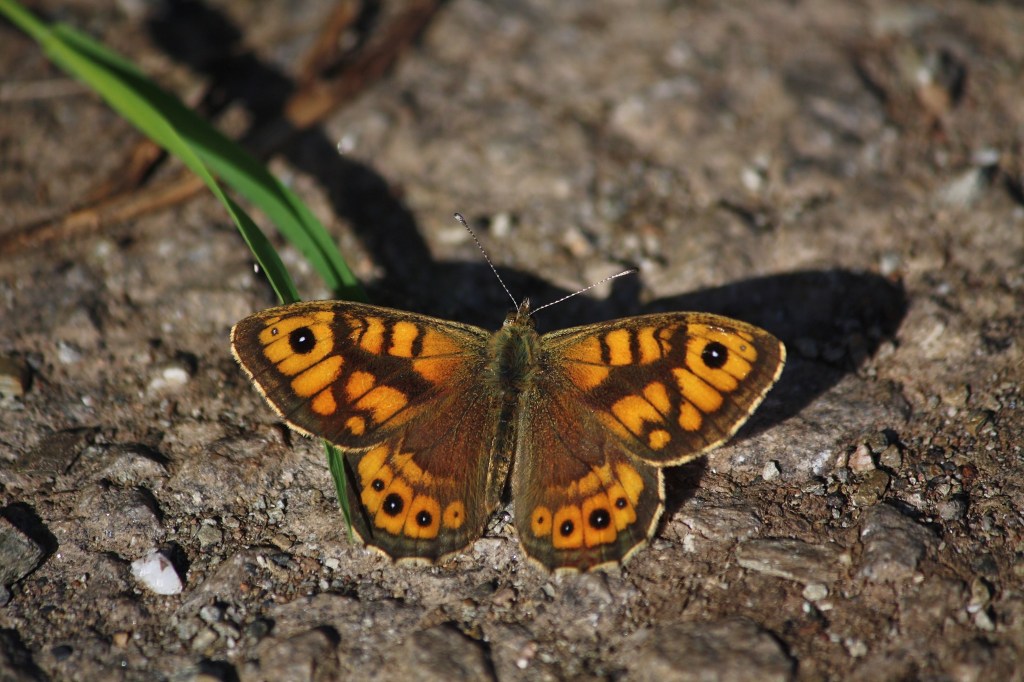
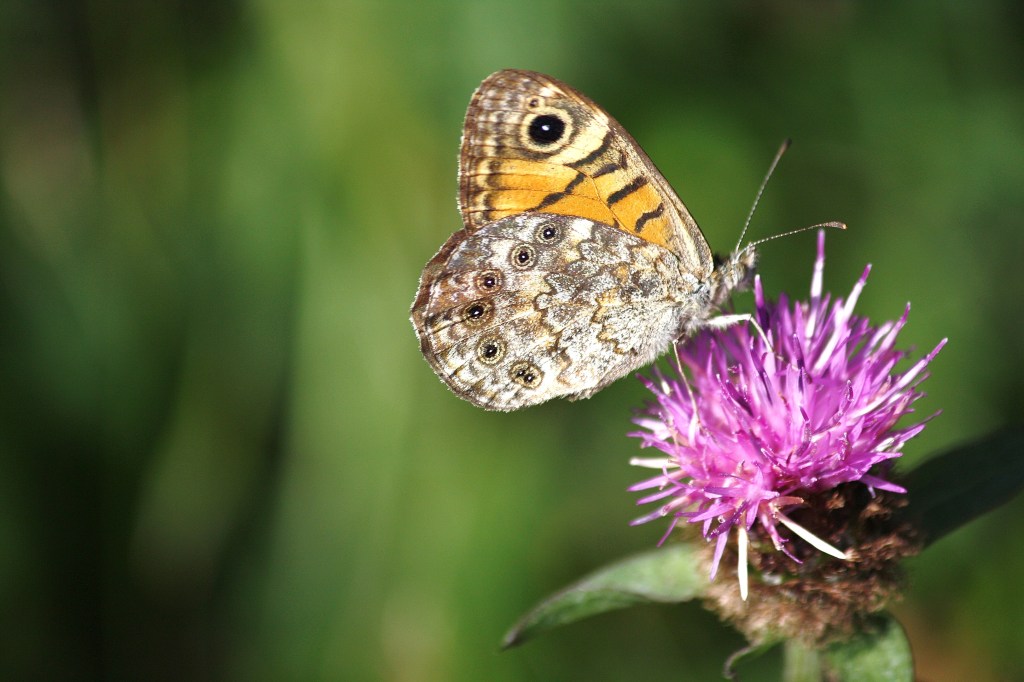
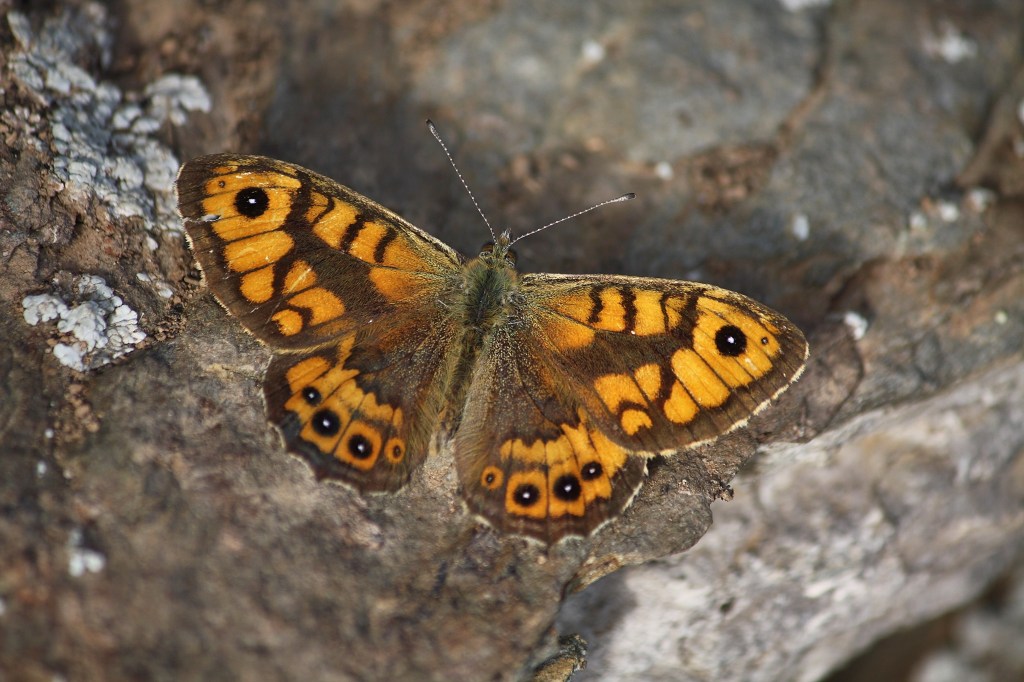
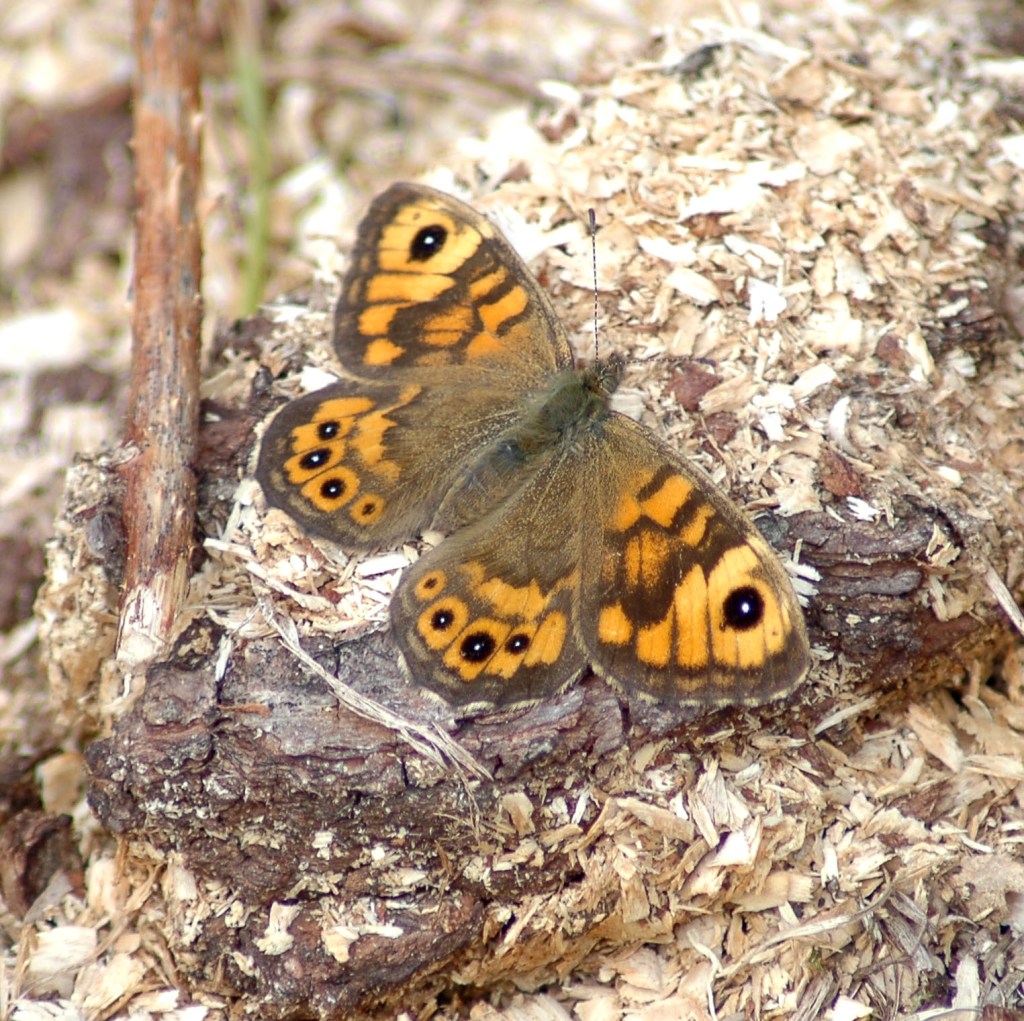
- Wingspan 45–53 mm. Female larger than male.
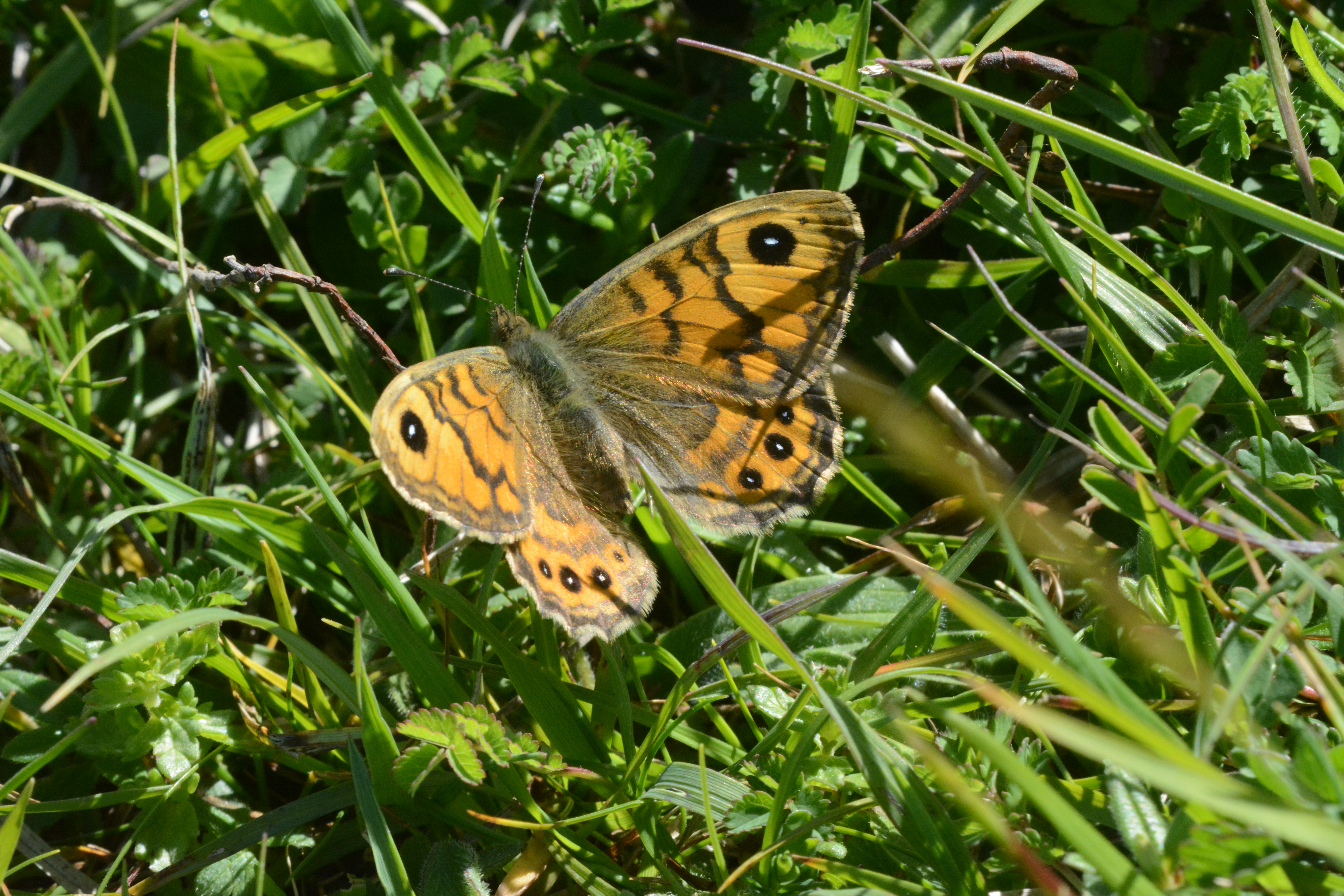
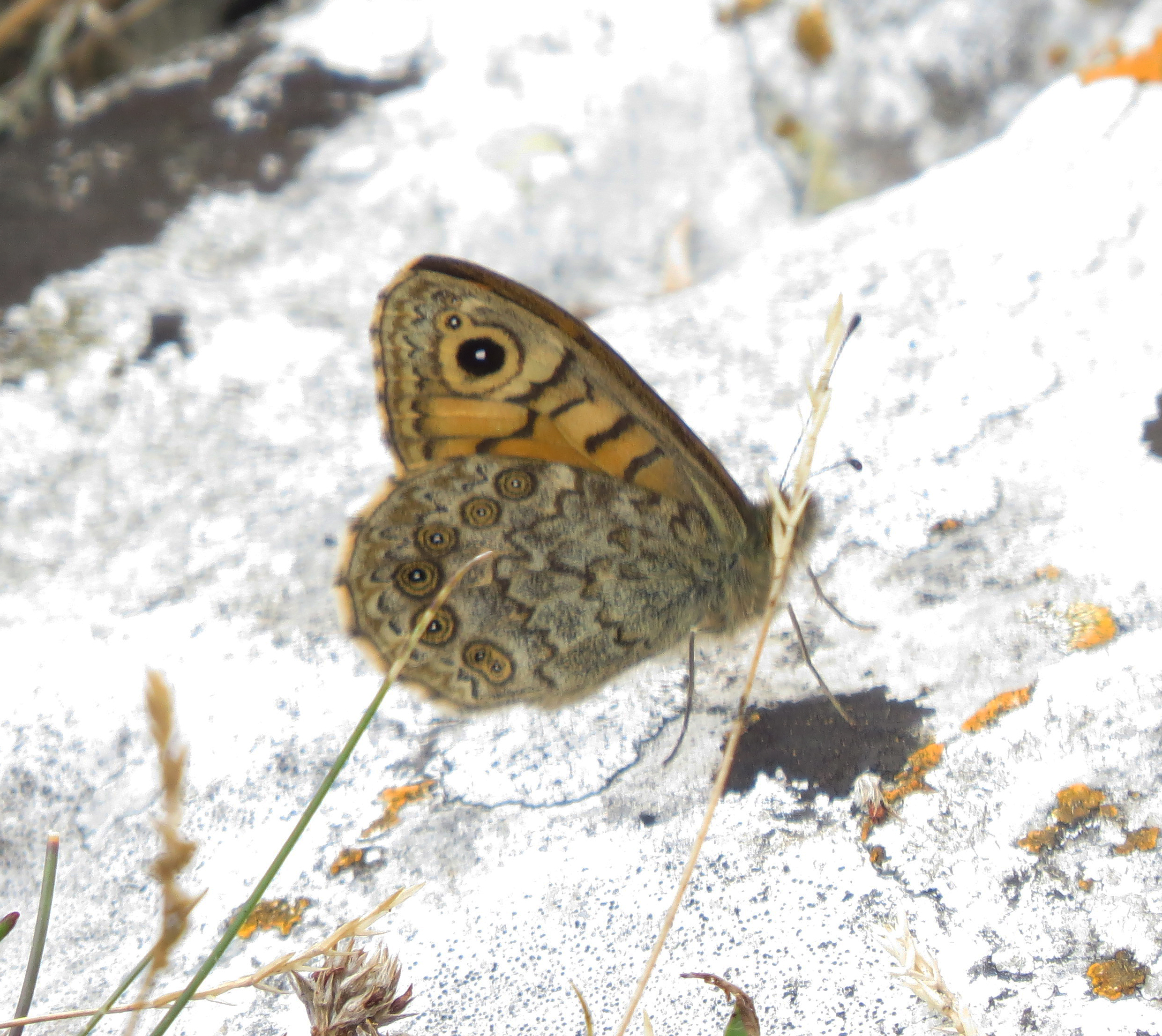
Caterpillar Food Plant: The main foodplants are Bents (various) (Agrostis spp.), Cock’s-foot (Dactylis glomerata), False Brome (Brachypodium sylvaticum), Tor-grass (Brachypodium pinnatum), Wavy Hair-grass (Deschampsia flexuosa) and Yorkshire-fog (Holcus lanatus).
Life Cycle
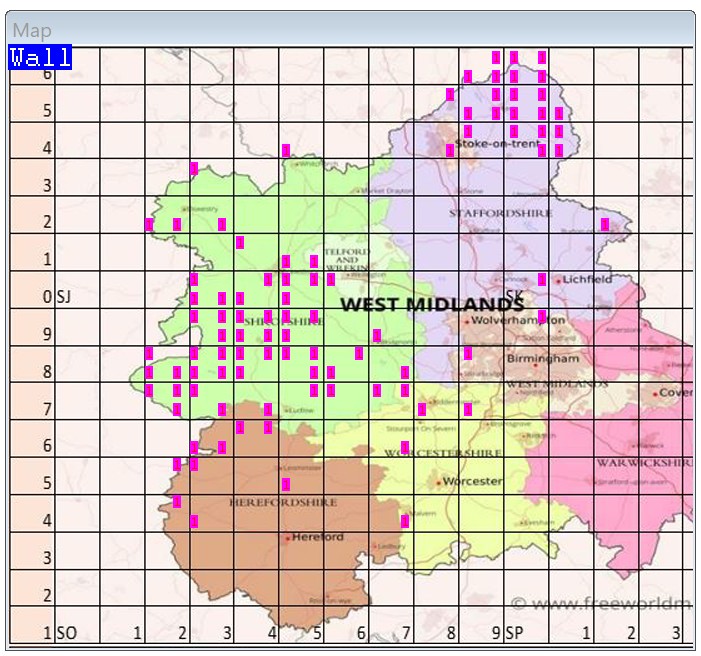
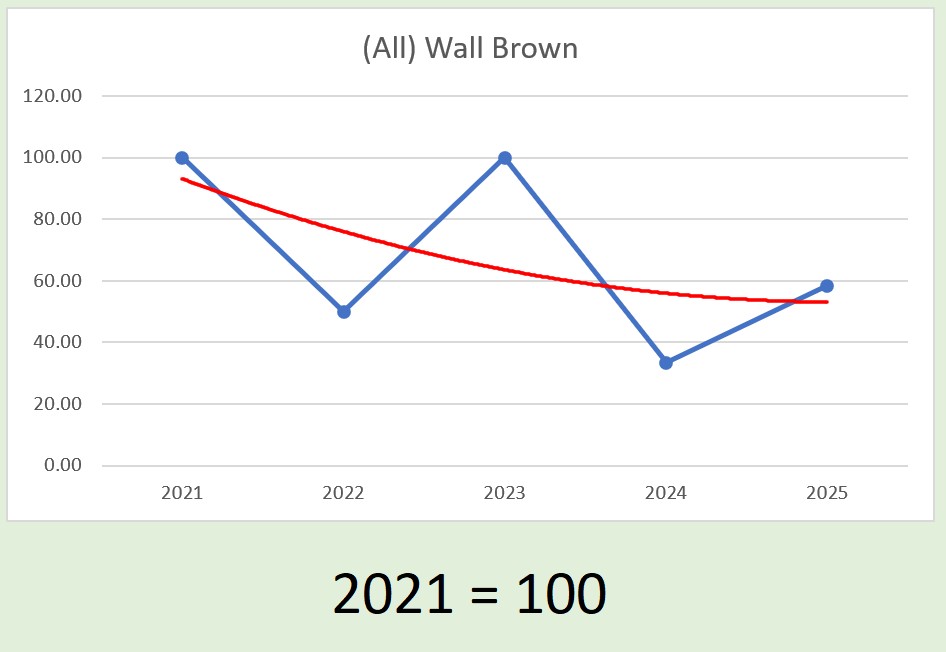
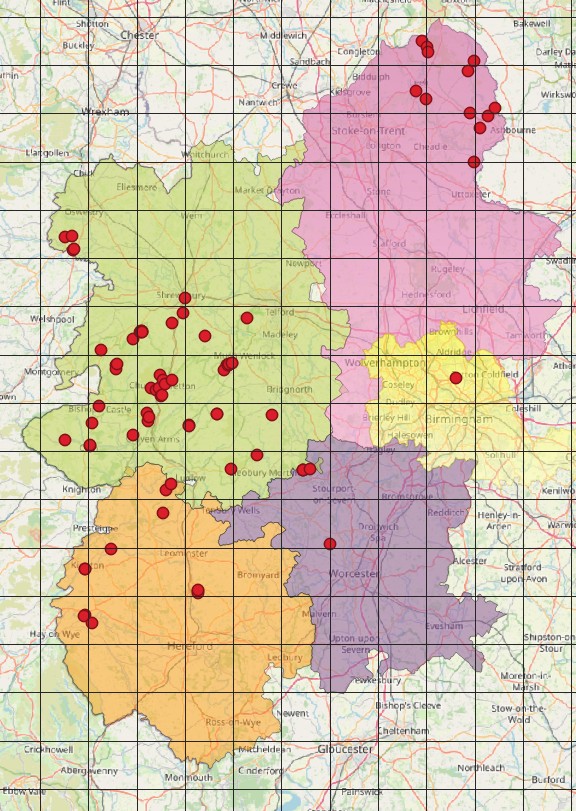
- The Charts show the distribution in 2020 and 2025
- The Population Trend from Transect Records 2020to 2025
- Phenology from Transect Records
- The Record of Wall on Green Farm Worcestershire is unlikely
 West Midlands Butterflies Blog