- National Status: Found throughout the UK with some losses in recent years. Population trend 10 years -34%: since 1976 -41%.
- West Midlands Status: Scattered occurrences across the region but scarce in Herefordshire. Likely under-recorded, seldom common, range probably stable. Population trend 10 years – decreasing.
- Hotspots: Whixall, Wem and Fenn’s Mosses in Shropshire, Cannock Chase in Staffordshire and the Malvern Hills in Worcestershire. Sites: Whixall Moss, Bury Ditches, Cannock Chase, Baggeridge Country Park, North Hill, Malvern, Portway Hill, Penny Hill, Hartlebury
- Common.Habitat: Found in a wide range of habitats reflecting the variety of foodplants it utilises. Heaths, moors, bogs, quarries, brownfield sites, scrubby grassland and woodland clearings.
- Flight: Period Mid-April to late June with some noteworthy July and even August records from the Malvern area. Peak emergence is mid-April to early June Wingspan 27–34 mm.

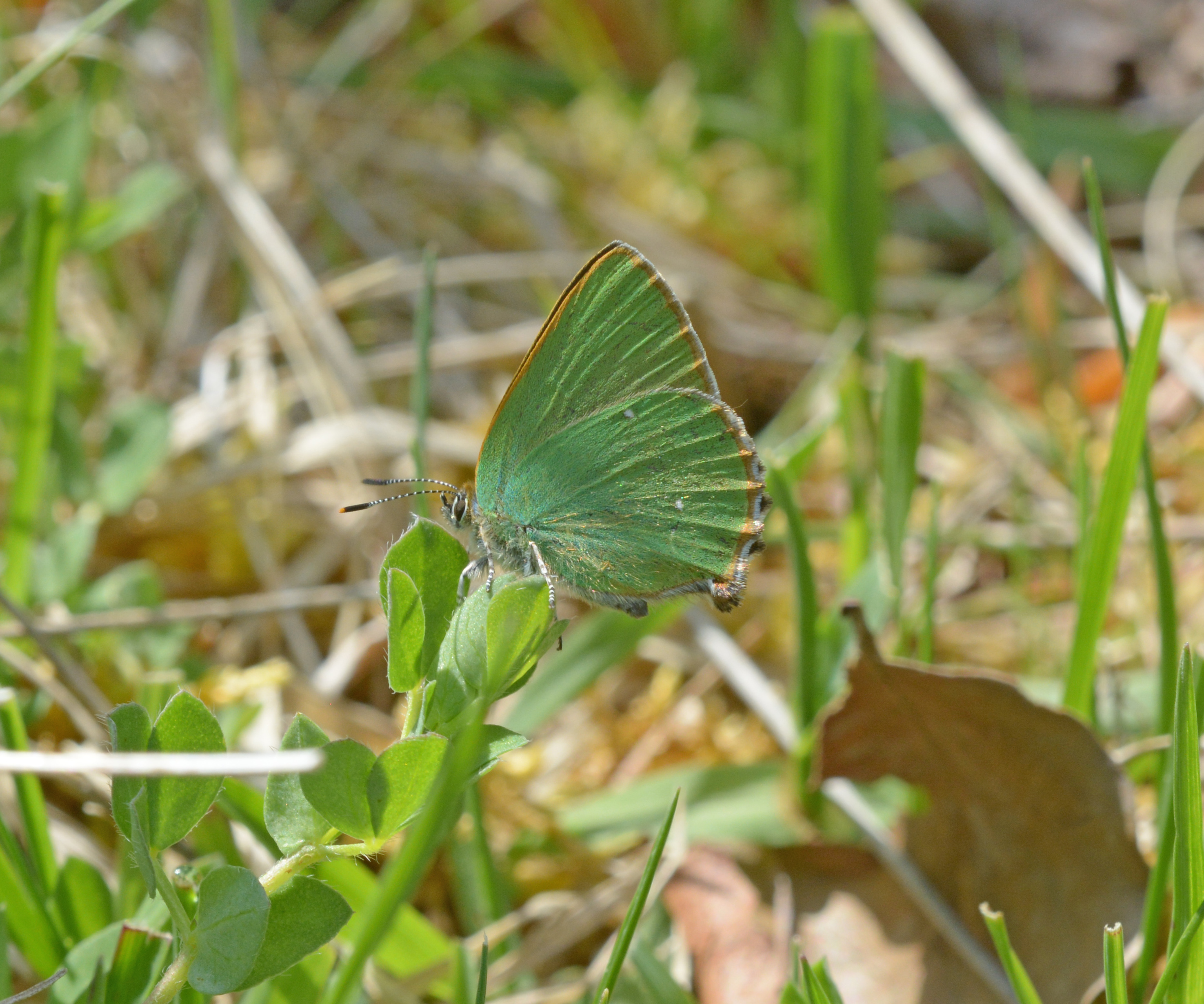
Caterpillar Food Plant: The main foodplants are Bilberry (Vaccinium myrtillus), Broom (Cytisus scoparius), Common Bird’s-foot-trefoil (Lotus corniculatus), Common Rock-rose (Helianthemum nummularium), Dyer’s Greenweed (Genista tinctoria) and Gorse (Ulex europeaus). Bramble (Rubus fruticosus), Buckthorn (Rhamnus cathartica), Cross-leaved Heath (Erica tetralix) and Dogwood (Cornus sanguinea) are also used.Habitat
Life Cycle
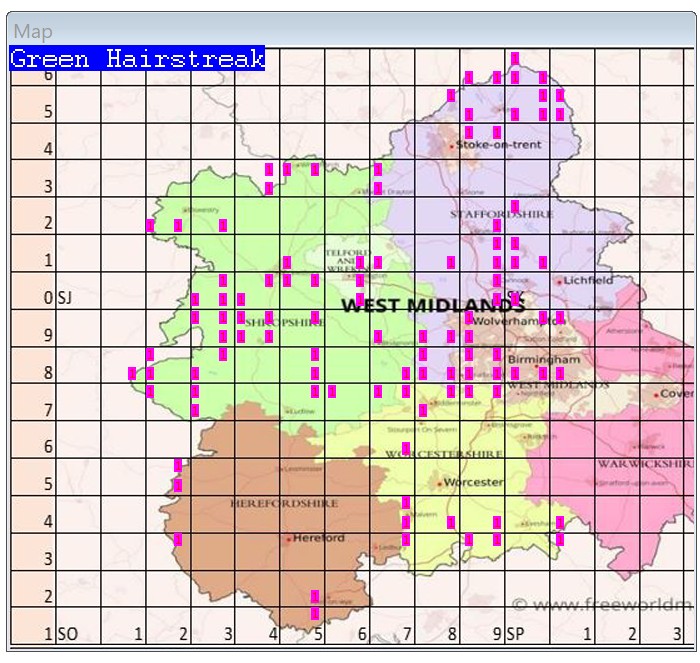
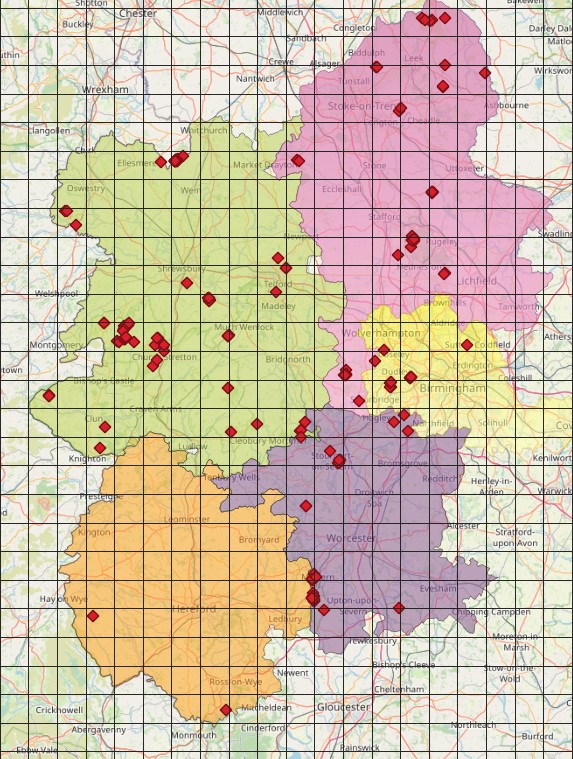
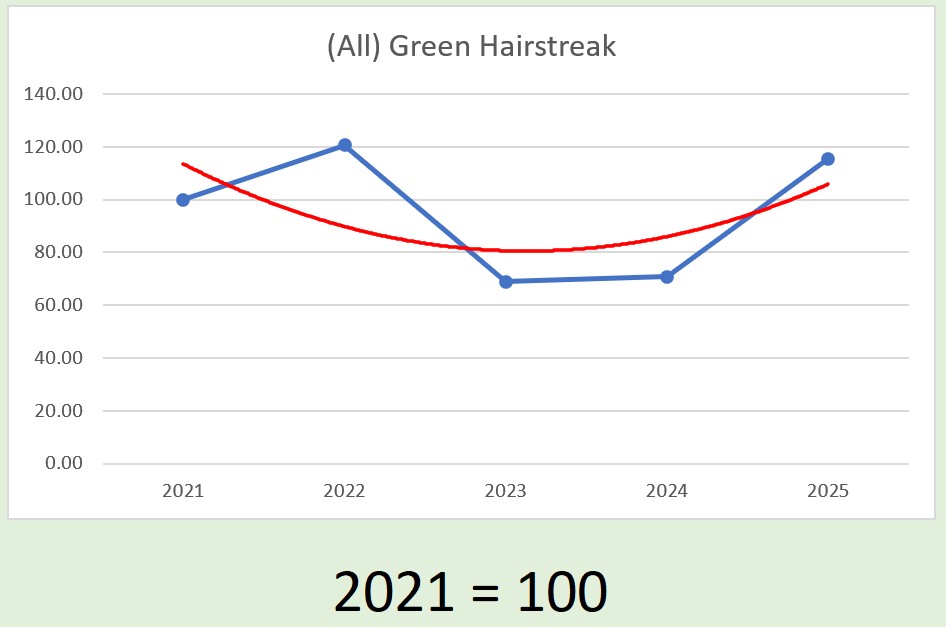
- The Charts show the distribution over the last 5 years 2020 to 2025
- The Population Trend from Transect Records from 2020 to 2025
- Phenology from Casual Records.
Detailed Mapping of sites on Google 2019
Detailed Mapping of Sites in Google 2020
Detailed Mapping of Sites 2021
Detailed Mapping of Sites 2022
Detailed Mapping if Sites 2023
 West Midlands Butterflies Blog